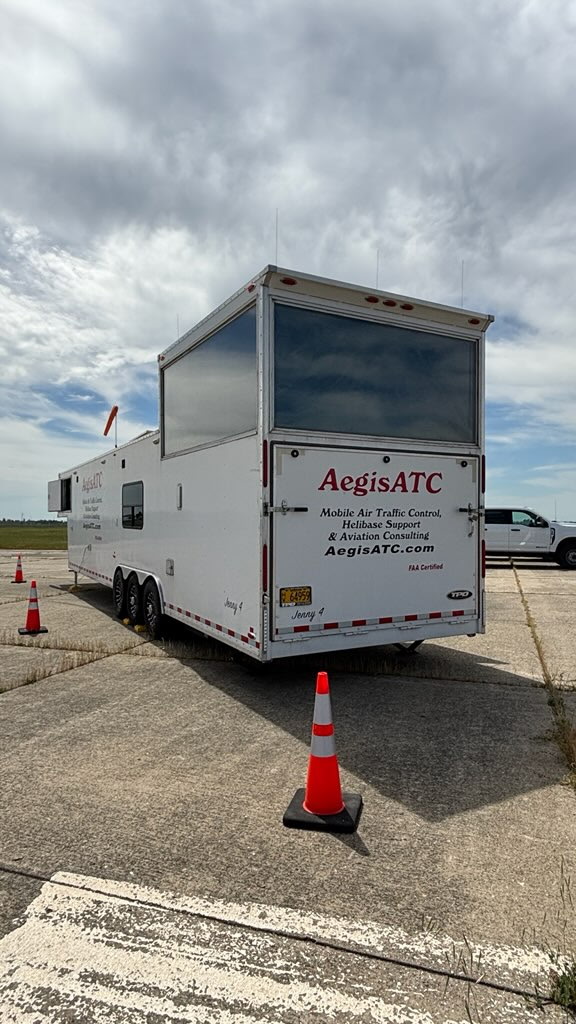
Mobile ATC History: Evolution of Air Traffic Control
Mobile ATC, History Of ATC, Aviation Technology
Mobile ATC History: The Tower Before the Tower
Modern Mobile ATC units and deployable Mobile Control Towers did not appear overnight. Their story begins over a century ago, when air traffic control itself was still an experiment. To understand today’s mission-ready, rapidly deployable systems, it is essential to look back to the first attempts to manage aircraft movements on the ground and in the air—long before radar, digital displays, or standardized procedures existed.
The Operational Problem Before Air Traffic Control Existed
In the years immediately after World War I, civil aviation expanded rapidly. Airfields were often little more than grass strips with a windsock and a handful of ground staff. Pilots relied on visual navigation, basic maps, and informal coordination. Yet traffic density was increasing, especially around major hubs such as London. Collisions, runway incursions, and near misses were becoming operational risks that governments and operators could not ignore.
There was no standardized Air Traffic Management framework, no defined roles comparable to today’s air traffic controllers, and no dedicated infrastructure equivalent to modern towers or Mobile ATC units. Ground coordination was typically handled by signalers using flags, flares, or boards. This ad hoc approach lacked consistency, traceability, and the level of control required to support a growing network of scheduled flights. For procurement officers and agencies today, this is a familiar pattern: capability outpaces control until a structured, certified solution is introduced.
Feb 25, 1920: The World’s First ATC Tower at Croydon Airport
On 25 February 1920, Croydon Airport in London commissioned what is widely recognized as the world’s first dedicated air traffic control tower. Physically, it was modest—a wooden hut raised above the airfield—but operationally it represented a fundamental change. For the first time, a specific location and team were assigned to manage aircraft movements as a core function rather than a side duty.
From this elevated hut, staff coordinated arrivals and departures using signal boards, lamps, and radio communication as technology evolved. They monitored weather, tracked aircraft positions as best they could, and issued clearances in a structured manner. This was the foundation of the History Of ATC: a single, clearly defined point of control, staffed by personnel whose primary role was managing traffic safely and efficiently. The wooden hut at Croydon was, in every sense, the “tower before the tower.”
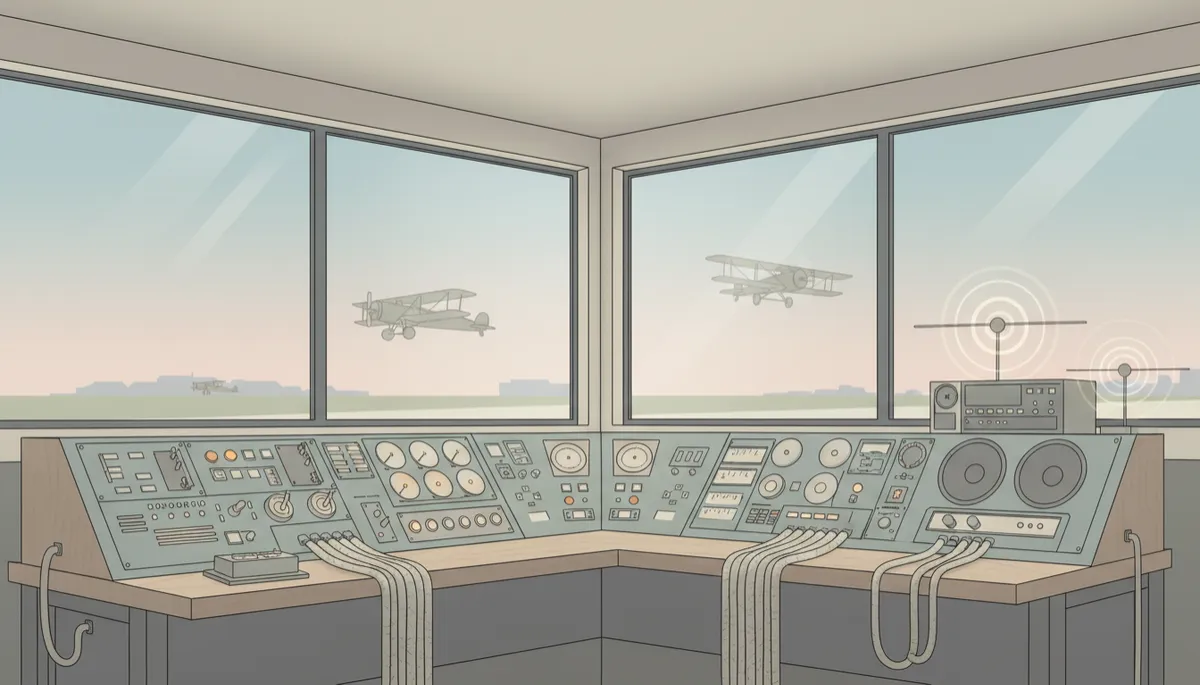
Early control huts established core ATC principles long before modern towers and mobile units.
The Tower Before the Tower: Core Principles That Still Apply
Although the Croydon hut looked nothing like a contemporary glass-and-steel tower or a containerized Mobile Control Tower, it introduced principles that still underpin Air Traffic Control today:
Centralized authority: A designated point where all clearances and instructions originated, reducing ambiguity and conflicting decisions on the ground.
Standard procedures: Early, simple procedures for sequencing arrivals, departures, and ground movements, creating predictability for pilots and ground crews.
Information integration: Weather, field conditions, and traffic information were consolidated in one location to support informed decisions.
Continuous observation: A raised vantage point allowed staff to maintain visual contact with the airfield, a concept that still informs both fixed and Mobile ATC design.
These elements transformed Croydon’s hut from a simple structure into a functional control facility. In operational terms, it was a prototype: a compact, purpose-built unit placed where it could deliver maximum control effect with minimal infrastructure. The same logic now drives Mobile ATC deployments for contingency operations, temporary airfields, and expeditionary missions.
From Fixed Huts to Flexible Mobile ATC Solutions
As aviation matured through the 1920s and 1930s, dedicated towers replaced huts at major airports. Height increased, equipment improved, and the role of the controller became more formalized. Yet the essential challenge remained: how to provide reliable Air Traffic Management wherever aircraft operate, including locations without permanent infrastructure. This requirement is where the lineage from Croydon’s hut to today’s Mobile ATC capability becomes clear.
Mobile Control Towers translate the same principles—centralized authority, standardized procedures, integrated information, and continuous observation—into a deployable format. Containerized or trailer-based units can be transported by road, sea, or air and brought online rapidly, providing certified ATC capability for disaster relief, military operations, remote construction sites, or major events. Where Croydon’s hut was fixed to one airfield, modern Mobile ATC is designed to move with the mission.
Aviation Technology: Enabling Deployable Air Traffic Management
The evolution from a wooden hut to sophisticated Mobile ATC platforms has been driven by advances in Aviation Technology. Early controllers at Croydon relied on visual signals and basic radio. Today’s deployable systems integrate surveillance, communication, and data services into compact, ruggedized packages that can operate in harsh environments while meeting regulatory standards.
Surveillance: Transportable radar, ADS-B receivers, and surface movement systems provide accurate traffic awareness beyond the line of sight available from a simple hut or tower cab.
Communications: Multi-band voice radios, data links, and secure networks allow controllers to coordinate with aircraft, ground teams, and regional ATC centers from remote locations.
Human–machine interfaces: Ergonomic consoles, standardized displays, and digital recording support safe, repeatable operations and post-mission analysis.
For agencies and procurement officers, this means Mobile ATC is not an improvised solution; it is a certified, technology-enabled extension of established Air Traffic Control practices. The same operational discipline that began at Croydon now travels with the tower, wherever it is needed.
Mission-Ready Mobility: Lessons from the First Tower
The History Of ATC shows a consistent pattern: capability is built in response to operational need, then refined through experience. The Croydon hut was created to manage Britain’s growing air traffic in a structured way. Today, Mobile Control Towers answer a comparable requirement—safe, controlled operations in locations where permanent infrastructure is not viable or not yet available.
Modern providers such as mission-focused teams at Rapid Tower Solutions (as an example of industry practice) design Mobile ATC platforms around readiness, certification, and proof-based performance. Systems are pre-integrated, tested, and documented so they can be deployed quickly under formal procedures rather than assembled ad hoc in the field. This approach reflects the same shift that occurred in 1920: moving from informal coordination to structured, accountable Air Traffic Management.
📌 Key Takeaway: The first control hut at Croydon demonstrated that even minimal infrastructure, if purpose-built and procedurally controlled, can significantly improve safety and efficiency. Mobile ATC solutions apply this lesson at scale, delivering certified control capability wherever operations demand it.
Why the Origins of ATC Matter for Today’s Decision-Makers
For procurement officers, regulators, and operational planners, the story of the “tower before the tower” is more than historical interest. It highlights three enduring considerations that remain central when evaluating Mobile ATC and deployable Air Traffic Management solutions today:
Defined authority and procedures: As at Croydon, the effectiveness of any control facility—fixed or mobile—depends on clear roles, standardized phraseology, and documented procedures. Technology must support, not replace, disciplined operations.
Visibility and situational awareness: The raised hut at Croydon provided a simple but critical advantage: a clear view of the airfield. Modern Mobile Control Towers extend this with integrated surveillance, but the objective remains the same—uninterrupted situational awareness for controllers.
Scalable, adaptable infrastructure: Just as Croydon’s hut could be expanded and upgraded, Mobile ATC platforms should be modular and configurable, supporting different mission profiles without redesigning core systems each time.
From Croydon to Mobile ATC: A Continuous Line of Control
When the wooden hut at Croydon Airport began operations on 25 February 1920, it marked the formal beginning of Air Traffic Control. It was modest, but it introduced an enduring concept: dedicated infrastructure and personnel, focused solely on the safe and efficient movement of aircraft. Every modern tower, every remote digital facility, and every Mobile ATC unit traces its operational logic back to that point.
Today’s Mobile Control Towers represent the latest stage in this evolution. They take the core principles proven in that first hut—centralized control, standardized procedures, integrated information—and package them into mission-ready systems that can be deployed wherever needed. For agencies tasked with maintaining air operations under changing conditions, understanding this history is more than academic. It clarifies why certified, tested Mobile ATC capability is now a strategic asset rather than a temporary workaround.
The tower before the tower at Croydon was a response to a specific operational challenge: managing Britain’s growing air traffic safely. The same challenge persists, now on a global scale and in more complex environments. As you evaluate Mobile ATC options and plan future Air Traffic Management capability, the lesson from 1920 remains direct and operationally relevant: effective control begins with a clear vantage point, a defined authority, and a system designed from the outset to manage risk, not react to it.