GCA's First Real-World Save at Quonset Point
Aviation History, GCA, Radar, Air Traffic Control
Proven Nine Days Later: GCA’s First Real-World Save at Quonset Point
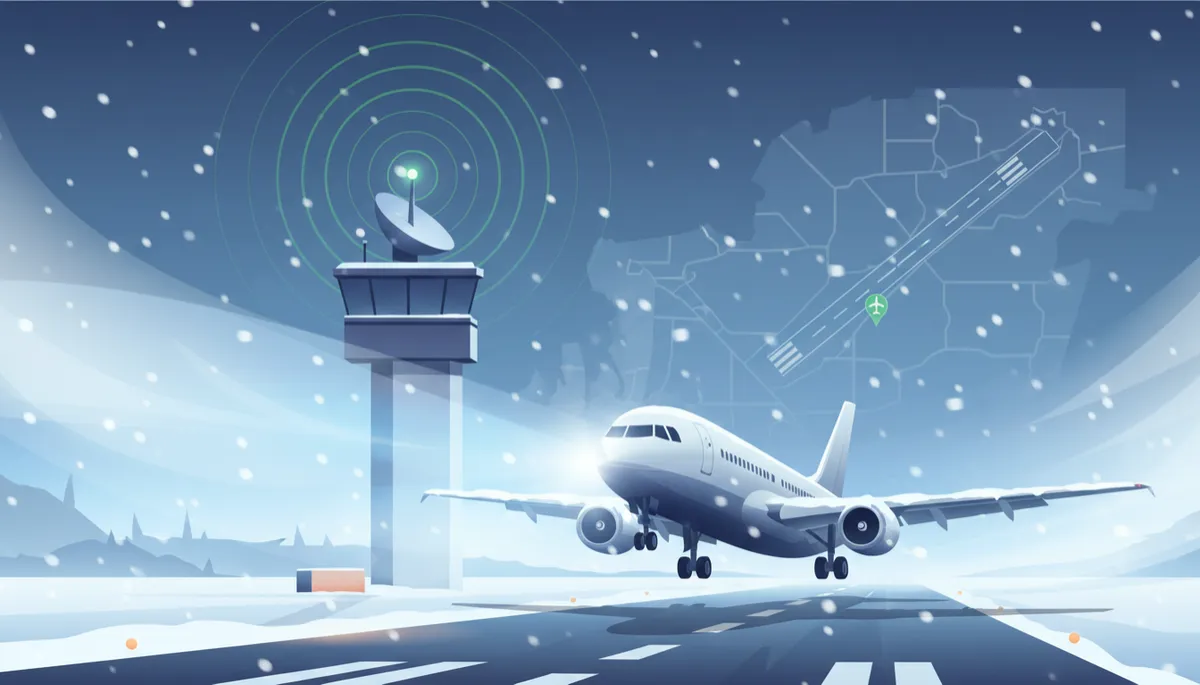
In the early days of radar-guided approaches, trust in new technology was built one mission at a time. The “Proven Nine Days Later” incident at Quonset Point stands out as Ground-Controlled Approach’s (GCA) first documented real-world save—an Aircraft Landing in a snowstorm that validated the system’s operational value just minutes before a scheduled flight demonstration.
Context: GCA Moves from Concept to Operational Tool
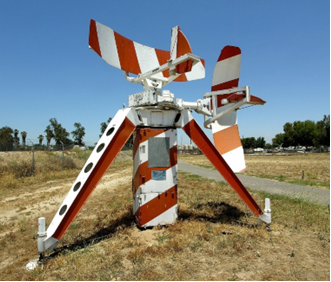
By the mid-1940s, Ground-Controlled Approach had emerged as a promising solution to one of aviation’s most persistent hazards: landing in low visibility. Using precision radar, GCA controllers could talk pilots down on a defined glide path, effectively becoming an extension of the cockpit in instrument meteorological conditions. For air traffic control professionals and procurement leaders, however, promise alone was not enough. Systems needed to demonstrate proof-based performance under real-world stress before they would be trusted for mission-critical deployment.
Quonset Point Naval Air Station in Rhode Island was one of the locations where GCA was being evaluated. The base operated in a demanding maritime environment, with coastal weather that could deteriorate quickly. It was a natural proving ground for a technology designed to secure Aircraft Landings when visibility collapsed due to fog, rain, or a Snowstorm Flight scenario. The events that unfolded there would move GCA from experimental asset to operationally certified capability in the eyes of many decision-makers.
The Setup: A Scheduled Flight and a System Under Scrutiny
According to historical accounts preserved by the Canadian Air and Space Museum and related archives, a demonstration of the new GCA installation at Quonset Point had been scheduled for visiting leadership. The plan was straightforward: a scheduled flight would arrive, and the aircraft would be recovered using the GCA system, showcasing how radar-guided vectors and precise talk-down procedures could deliver a safe landing in poor visibility. Controllers, technicians, and senior officers all understood the stakes. This was not just about technology; it was about whether GCA would be accepted as a standard tool of modern air traffic control and integrated into broader Aviation History as a trusted asset.
What no one planned for was that GCA would be called upon to prove itself not during a carefully choreographed demonstration, but during an unscripted emergency—only thirty minutes before that scheduled flight was due to arrive. The system, the team, and the procedures would be tested in the most demanding way possible: a real-world save in deteriorating winter weather.
The Snowstorm Flight: An Aircraft in Trouble over Quonset Point
As the story is recounted in period documentation, a Snowstorm Flight was inbound to the Quonset Point area when conditions rapidly worsened. Visibility dropped, ceiling lowered, and the airfield environment transitioned from challenging to critical. The aircraft, flying without the benefit of today’s advanced avionics, was at risk of being forced to divert or, worse, attempt a hazardous approach without adequate visual references.
Controllers in the GCA unit recognized that this was exactly the kind of situation the system had been designed to handle. Using their precision approach radar and surveillance radar, they acquired the aircraft, established its position relative to the runway, and prepared to conduct a full talk-down. This was more than a training evolution. It was an unscheduled, high-consequence operation with an aircrew depending on them for a safe outcome.
Precision radar guidance turned a marginal approach into a controlled, stable landing.
Inside the Approach: Radar, Voice, and Controller Discipline
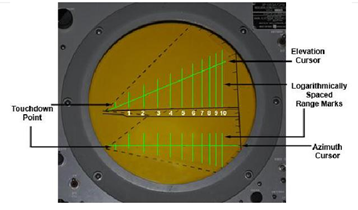
The core strength of GCA lies in the integration of radar data with disciplined controller phraseology. On that day at Quonset Point, the GCA team executed the standard pattern: vectoring the aircraft to a position from which they could establish it on the final approach course, then providing continuous heading and glide path corrections. Each instruction—“slightly left of course,” “begin descent,” “on glide path,” “over the threshold”—was driven by real-time radar returns and delivered with calm precision.
For professionals in air traffic control, the discipline displayed is familiar. Controllers must translate complex, fast-changing radar information into short, unambiguous commands that a pilot can execute under stress. In a Snowstorm Flight environment, where cockpit workload is high and external cues are minimal, the quality of those instructions often determines whether an Aircraft Landing is stable and controlled or unstable and unsafe. At Quonset Point, the GCA controllers met that standard under pressure, guiding the aircraft down through the snow and onto the runway with accuracy that matched or exceeded visual approaches in good weather.
Proven Nine Days Later: From Skepticism to Acceptance
The phrase “Proven Nine Days Later” comes from the timeline between that emergency recovery and the official evaluation of the system. Nine days after the snowstorm incident, senior officers and observers gathered for the planned demonstration of GCA. By then, the question was no longer whether the system might work. It already had. The Real-world Save—bringing an aircraft down safely during a snowstorm at Quonset Point just thirty minutes before the scheduled flight—had effectively pre-certified the system in the most compelling way possible: operational performance under unplanned, adverse conditions.
For procurement officers and agencies, this sequence matters. Laboratory testing and controlled trials are necessary, but they are not sufficient for mission-critical capabilities. The Quonset Point case provided a concrete, documented example of GCA delivering a measurable safety benefit. It transformed GCA from a promising technology into a proven tool, accelerating its adoption across multiple services and bases. As the historical overviews of GCA note, radar-based approaches became a cornerstone of instrument operations in the postwar period, particularly in challenging weather environments.
Operational Lessons for Today’s Aviation Professionals
While avionics, navigation aids, and automation have advanced dramatically since the era of early GCA, the operational lessons from Quonset Point remain relevant to today’s aviation community. Three themes stand out for airtrafficcontrol units, operators, and procurement teams responsible for mission-ready capabilities:
Certification through operational proof: The first real-world save established GCA’s credibility in a way no briefing could. Modern systems—from advanced surveillance sensors to decision-support tools—similarly gain acceptance when they demonstrate clear value in live operations, not just simulations.
Human–machine integration: GCA did not replace pilots or controllers; it enhanced their capability. The Quonset Point landing shows how radar and trained controllers, working as a single integrated system, can achieve outcomes that neither could deliver alone—an enduring model for current human-in-the-loop technologies.
Preparedness for unscheduled events: The system was configured for a scheduled flight, yet the defining moment was an unscheduled emergency. Mission-ready teams and technologies must be configured not only for planned demonstrations, but for the unplanned calls that define real operational value.
Quonset Point’s Place in Aviation History
In the broader arc of Aviation History, Quonset Point is often remembered for its role as a major naval air station and training hub. The GCA Real-world Save during a snowstorm adds another dimension to that legacy. It marks the base as a site where a new generation of radar-based approach control was not only tested, but decisively validated under pressure. The event contributed to a shift in how militaries and civil authorities viewed ground-based radar support, paving the way for more structured instrument procedures and, eventually, the sophisticated surveillance and approach systems in use today.
For professionals evaluating new systems now—whether in navigation, communications, or surveillance—the Quonset Point case serves as a reminder that the most persuasive evidence is often a single, well-documented mission where technology and trained personnel prevent an accident, recover an aircraft, or preserve operational tempo in adverse conditions. That is the standard to which mission-critical capabilities are, and should be, held.
Conclusion: A First Save that Redefined Expectations
The “Proven Nine Days Later” incident at Quonset Point encapsulates the transition of GCA from experimental equipment to trusted operational asset. GCA’s first real-world save—bringing an aircraft down safely during a snowstorm at Quonset Point just thirty minutes before a scheduled flight—demonstrated that radar-guided approaches could deliver reliable, repeatable results when they mattered most. It was a pivotal Aircraft Landing in every sense: a safe outcome for the crew, a validation of the controllers’ training, and a turning point in the acceptance of radar-based airtrafficcontrol.
For today’s aviation professionals, the value of that Real-world Save extends beyond its historical interest. It offers a clear model for how new capabilities should be evaluated, certified, and deployed: through disciplined training, integration with existing procedures, and a focus on measurable performance in real conditions. As agencies and operators continue to modernize their fleets and ground systems, the lessons from Quonset Point—about readiness, proof, and the partnership between radar technology and human expertise—remain directly applicable to the mission-ready operations of the present day.